A Turn Left Unplayed
Begin at the last turn of a short exchange
One character has offered to restate a question. The other has not answered, and the room already has a place where a mediator can listen to both. The paper pieces remain placed with the last phrase visible. The player can leave a turn for listening, close the agenda item or open a neutral room where the same words can be read slowly. The game preserves the starting phrase while another part of the scene proceeds. The older statements and current options come from an invented disagreement with no real actors, locations or weapons.
Use a pause to leave one thing available
Place a pause mark next to the open question. The model retains both speakers’ current readings and shows a short interval before another decision. A neutral question card can name the one thing both have seen. If the player already opened another conversation, use the old pause to compare what each person carried into that room. Preserve an earlier small state when trying another reading. An answer can remain pending after the turn. That gives a new role a place to join without telling them the earlier argument has been settled. A short scene ends once both can name the next matter to discuss.
Keep the waiting place distinct from an ending
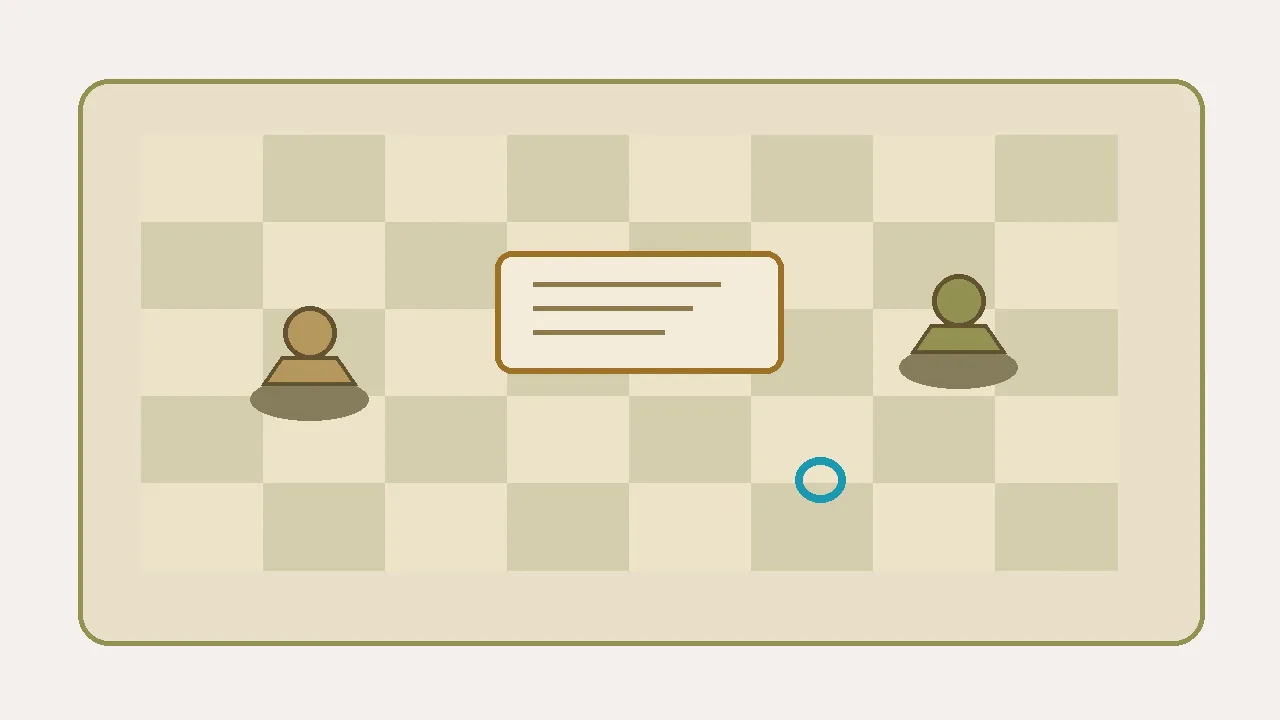
The studio’s sketch puts the pause on a pale corner of the board. An outline in teal shows when the next question has a place, and amber holds the earlier phrase in the view. Olive marks a shared part of the agenda. The waiting place should be recognizable without motion. The shape can stay there after a character moves to the next room. Hold the Board for One Reply explains why the new question does not cover the old pause. A reader has both views nearby before deciding whether the new exchange gives the older wording a useful context.
Keep a result while restoring the starting exchange
This is an early fictional prototype. Run a brief scene after a pause and describe which question remains open. Then try a different path that keeps one earlier reading and offers another point to talk. A reader should be able to point to the preserved phrase before making a comparison. What a Revision Keeps discusses the small record we leave in the last frame. The result must give an understandable next conversation without changing what either character could see in the first run. The game gives a disagreement another place to be read.
Draw the room that can host another question
Put the earlier phrase near the entrance of the alternate scene. The first person can leave a small written question on the table. The other person can use it to restate what they heard. Give the mediator a view of both marks before they use a new sentence. We can now ask the reader whether the scene gives the other character room to answer or only repeats an earlier line. A stopped view preserves the two positions during the pause. Before opening another turn, let the reader point to the question that can remain available for both participants.