Hold the Board for One Reply
Give waiting a place of its own
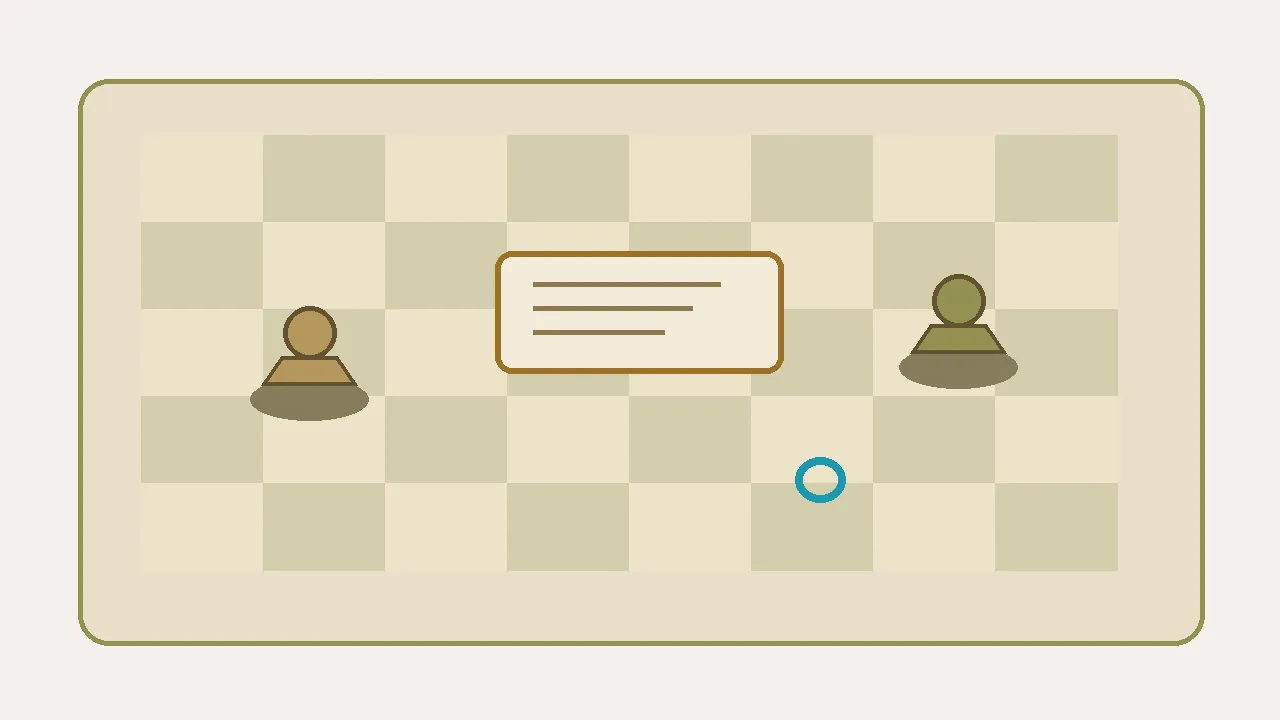
The pause begins while two notes are on the board. One names the first question, and one records how a character heard it. The model can leave both available while giving the other person time to reply. In the first drawing the clock simply stopped when a player chose the pause. A reader knew they were waiting but could not tell what the next spoken line was meant to address. We moved the pause beside the open question and left the earlier interpretation above it. The old piece still has the same place in the room. The player can now see that somebody has time to answer while a separate question remains in the scene.
Let the choice describe its immediate effect
A pause can hold the current question. Another move can open a shorter question about the same phrase. Show the two places before the player chooses. At the next step, the character responds to whichever line remains visible in their view. The reading should preserve what both are waiting to hear. We tried putting one big word over the board for pause and another large word for reply. It made the timing clear on a desktop but hid the characters on a shorter screen. A small mark near one empty square and a visible title beside the reply give both choices their own places. The reader can describe the earlier effect while a later question comes into view.
Create another scene after the same wait
Try the initial exchange in A Turn Left Unplayed. Let one reply remain open and return to the original position. In a second trial open the later room for listening. Keep both results beside the original phrase. The new scene can share that phrase and have a different place to read it. A person looking at the later room can ask which earlier question was left unresolved. If they start straight from the end, a small older frame can tell them whom it concerned. The next playtest will use both parts of the drawing, so a reader can identify a choice about timing before explaining why the conversation remained open.
Give the earlier wording enough room beside the response
The pause picture needs a place for the old question, the current time and the possible next scene. If the response has moved into the old question’s position, open another strip at the edge of the board. In When the Same Word Lands Twice, the earlier phrase gives both characters one thing to point to. Retain that place while moving the new reply lower. A reader should be able to tell what will stay the same after they read a different scene. We can then ask how another response might preserve space for both participants. The two frames should be readable together without changing the initial premise of the fictional exchange.
Pause the demonstration and read it without timing
At the end of a test, stop the animation and show the same labels in a still. Ask a reader which question remains available while someone waits. Let them read a new answer and find its source. If the earlier piece was removed, give it a visible outline alongside the reply. The old phrase can stay when another scene opens. We need a new reader to know that a pause preserves a choice and can have an end different from a closed discussion. Check a smaller viewport before moving the pause to another part of the board. The earlier label ought to stay visible even when the two scenes appear one above the other.