
When the Same Word Lands Twice
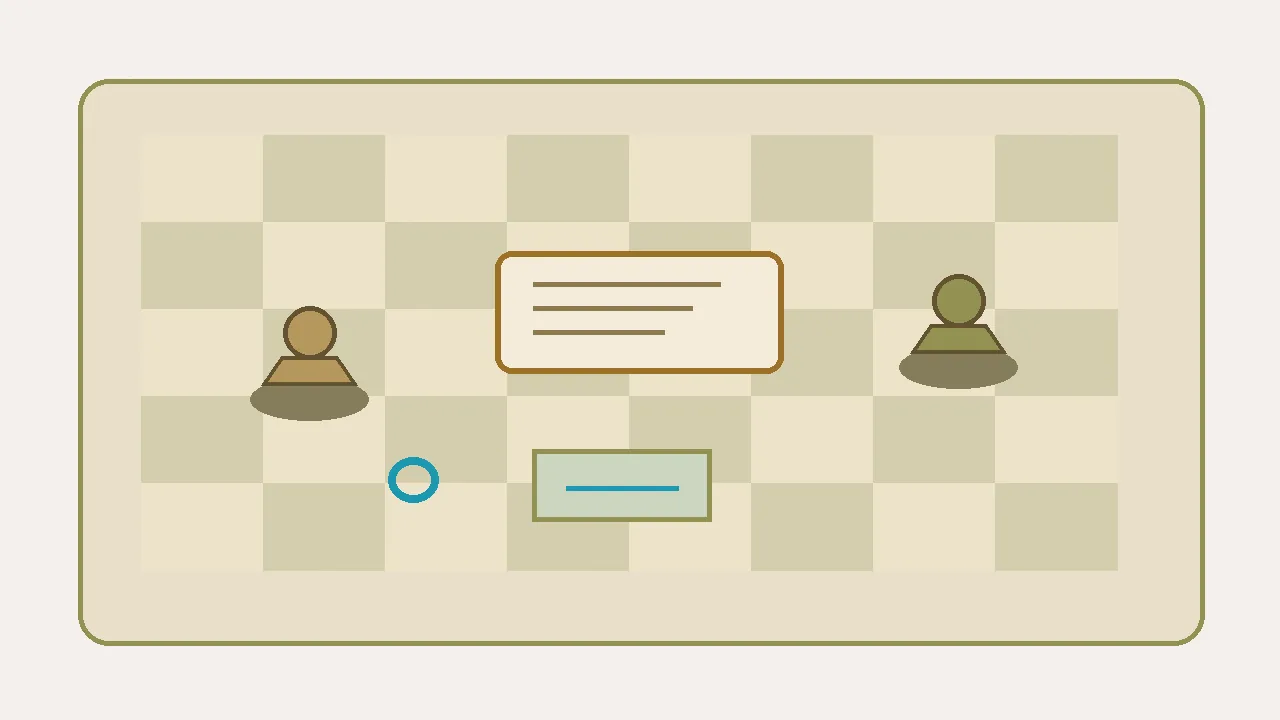
Give both characters the same words
A short phrase is set beside the paper chessboard in our first scene. One fictional character hears it as an assignment. The other hears an invitation to return to a discussion that ended before they could ask a question. The phrase itself does not move when one character replies. In an early script, we changed it in the captions to fit the different replies. It made the disagreement look as though the two were reacting to different statements. We brought the same phrase back to the centre and gave the earlier expectations their own places on either side. That let us see a difference in how a reader interpreted the line while keeping the words both of them could actually see.
Let the first response identify a point of uncertainty
A character can ask what the speaker meant by one word instead of repeating the entire exchange. We want the new question to sit beside the earlier sentence. When we first put it in a box on the far edge of the drawing, it looked like another scene had begun without recording how the first one ended. We drew it closer and left the sentence visible above it. The current view allows a reader to identify which part of the earlier phrase might be read differently. A brief caption says who can answer that question. A new scene can then leave an old interpretation unresolved while both characters have a better account of what the other person actually heard. The smaller drawing should show those labels in the same order.
Compare two useful responses without changing the opening
In The Space Between Two Signals, you can ask about the word or offer to return to the discussion later. Both moves retain the earlier phrase. They lead to different replies once the other character can answer. We preserve one result while returning to the opening for the other. The scene gives the player a place to explain which response found shared meaning. It can also leave them with a reason for another question. A useful test does not need to choose a preferred way to talk about a real situation. It asks whether a fictional response follows from what each participant can see. The board can show that relationship before the narrator describes the result.
Keep a readable place for the later discussion
The player can open an alternate room where a neutral mediator repeats the part both characters understand. The opening needs the earlier phrase beside a new question. When those two overlap, make a small space on the table for the old statement. Leave the visible mark for a pause on its own square. The Dialogue Room at the Side describes that waiting place. Once it becomes possible to read a new scene, keep the source of the question available if the reader returns to the board. We can then compare a short reply with a quiet moment where another voice has a chance to speak. Both should make sense with the earlier phrase still in view.
Ask what a character heard in the stopped frame
We will show one opening to a person who has never read the case. Ask what both participants could see and what each heard on their own. Then let the reader open the new reply. Their explanation can suggest a better place for the original words. If the difference only appears in a color change, add a short readable role to the newer line. Preserve enough of the first view for a comparison when someone starts from the last still. The next model should be able to retain the same question after another response. A new scene can follow only after that relation is visible.