The Dialogue Room at the Side
Start with a place for the older question
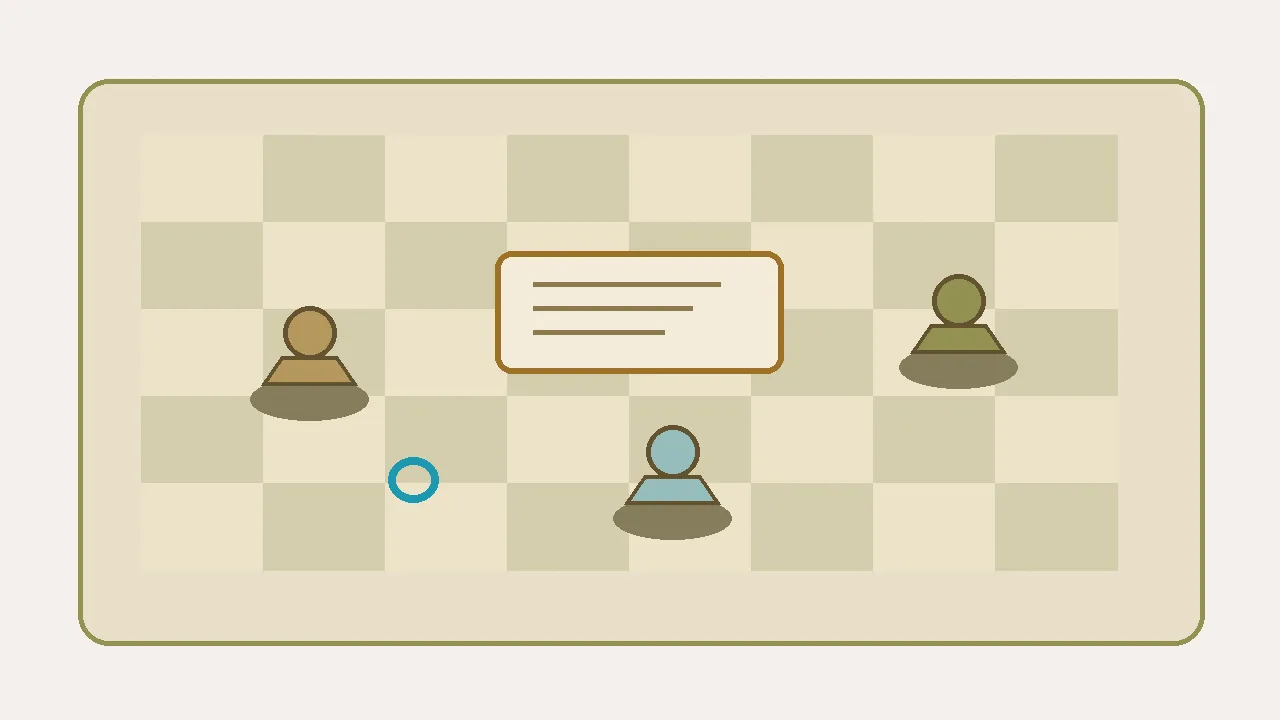
The room at the side of our paper board begins with a small table and three positions around it. Put the question that already appeared in the earlier scene on the table. A character can point to one word and a mediator can repeat it. The other person should have enough room to answer without another short debate being treated as finished. In the first setup, we opened the new room and began a fresh page of dialogue. The result looked like a new game, and a reader could not say what the meeting carried from before. We put the earlier line on a smaller shared card. The player can reopen it from the place where it originally appeared.
Keep two readings with one common object
The original question needs a reading from both participants. Their earlier interpretations can appear near their places in the side room. The mediator hears the line they both already saw, then asks one question about it. We draw a short route between the old position and the common card. An earlier mark can remain in the left margin while the new reply comes in below. This gives the player a way to compare the old phrase beside the later one. If someone reads only the newer line, a short caption can tell them which earlier scene left it open. Each character can then reply from their own role in the invented meeting.
Reopen the earlier route while preserving the room
In A Turn Left Unplayed, a player can choose to leave a pause and hear a reply where they are. In another result they open this room while the same question remains available. We want both results to retain the earlier words. The second version gives a mediator a short turn to listen, with a visible place for the two replies. If a reader asks where the dialogue began, point to that earlier card and let them compare the two views. The choice should feel like moving where a question can be heard in the story. The new room has no additional rules that would decide the dispute by itself.
Let the image show an open question and another way to read it
We tried two positions for the common card. In the first it sat between the two participants; in the second it was near the mediator. Both can keep the old writings available. For a phone reading the first was easier because the viewer could see how both people had a way to point to it. We can move the later reply below the table. When the Same Word Lands Twice gives us an earlier scene about why the same phrase can reach two people differently. Keep the connection to that reading close to the currently open line. The table illustration can show where a person can take another turn before the narrator names the result.
Ask who can explain the original question now
After a short test, ask what both characters know and what the new room gives them time to say. The answer can keep a disagreement around while pointing to a useful shared action. If somebody thinks the second room has already settled the issue, check which marker looks closed. Change the caption and compare the first still again before drawing another scene. A different result should leave the original sentence where it can be found on a narrow screen. A reader can then say what the new route preserves and which questions are available. That gives the draft a definite place to stop without changing the two earlier interpretations.