
The Space Between Two Signals
Put the phrase in a room with two readers
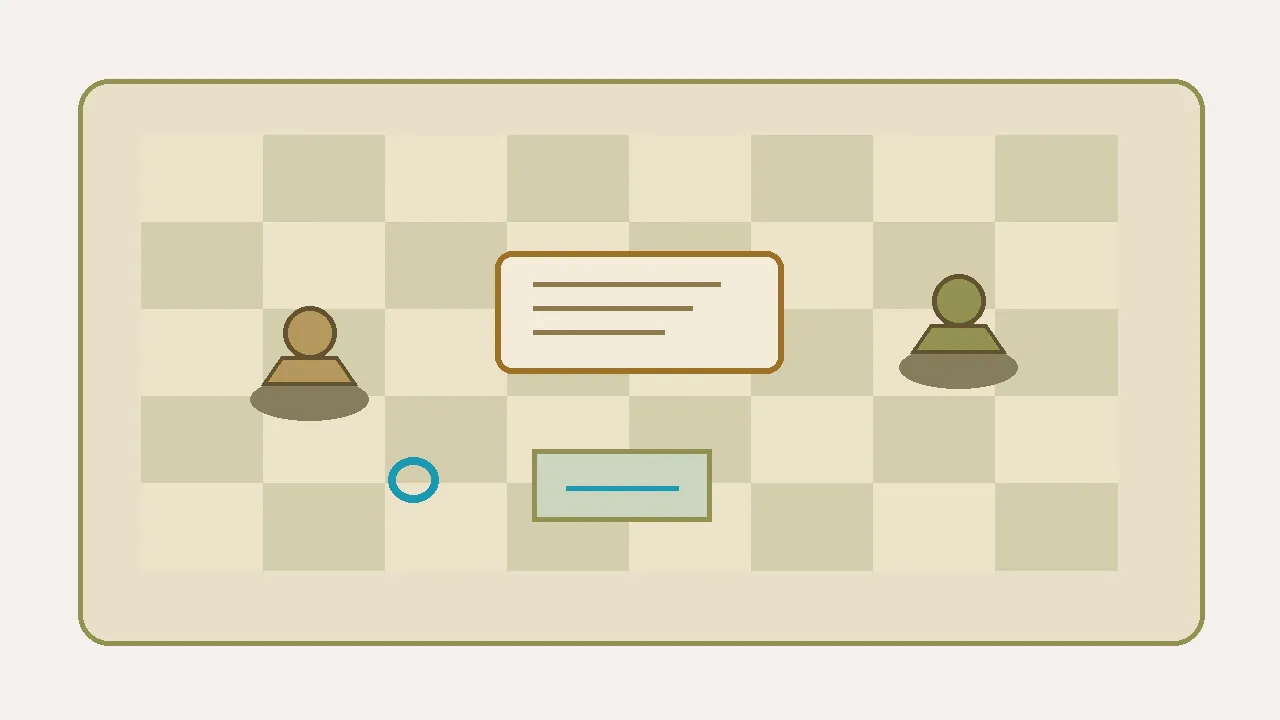
The first scene is a fictional meeting between two delegates on a tabletop board. Both see a card with the same short phrase about returning to a previous discussion. One character hears a demand. The other hears an invitation to check the last wording together. A small line beside the question shows what each character has already read. The player has the same published phrase and two routes for the next scene. They can leave it unchanged and ask a clarifying question, or offer another place to continue the discussion. Both choices require room for the other character to answer.
Choose a question the present board can support
Start by pointing to the shared word on the card. The opening scene can show the first character’s view and the part of the phrase the second character reads. Put the response beside the original instead of removing the phrase when the reply arrives. Then turn to the next scene. In one path, both readers can say what the invitation meant in the first place. In another, they still have different ideas about the term, but a new question can remain open. A player can compare whether their choice produced enough common ground for another line. The pieces represent readers, questions and the places where a dialogue can continue.
Draw one reading on either side of the board
Put an amber border around the original line and a small teal mark near the response available to both. Olive fills a question the characters can still discuss. An older interpretation can remain under a separate heading. A reader can compare either on a still. When the Same Word Lands Twice describes why we keep the earlier mark when the newer phrase opens. The diagram needs a stable place for a person who enters the scene halfway through. Draw the same card in both views so the change appears in the reading rather than with a different set of pieces.
End where a second question becomes possible
The next scene can take one positive step without concluding the dispute. Open the older view and try another response with the same words and characters. The Dialogue Room at the Side gives a second scene that retains one of those facts while a mediator enters. This is an early fictional tabletop concept. We want someone to describe what each character heard and choose a question that both can actually read. The result should show whether the newly opened discussion can keep their earlier questions available. A later prototype can invite another role once the original exchange has a visible end.
Give the two readers a chance to proceed
The comparison can end after one person asks about the first word and the other describes how they heard it. The author leaves their original positions available. A different scene can put a chair beside the board where a third person can repeat the question. Both need room to point to the phrase before it is restated. We retain that earlier line under the same title as a reference for a second pass. This gives the test a little more context without changing the original sentence or closing the other reading.